No Sweat, Only Sparkles - The Luxury of Running

One hundred and seventy-four kilometres, nine thousand seven hundred metres of elevation, forty-five hours of running. This is the Ultra-Trail du Mont-Blanc (UTMB); one of the most popular trail running events in the world. Attracting thousands of runners and spectators to the start line in Chamonix, France, the race is a jaw-dropping display of the human body’s extraordinary capabilities. This year, Ben Dhiman’s and Blandine L’Hirondel set record times in the male and female categories of under nineteen hours and twenty-two hours respectively. Compared to the London Marathon, there are fewer runners at UTMB due to its stricter entry requirements. So, why did Chamonix’s current mayor, François-Xavier Laffin, describe the event as ‘unbearable’ in an interview with L’Équipe?.
It is not so much the amount of runners that are overwhelming the French town, but the sporting brands that use the occasion to showcase their products. As the UTMB’s ‘premier partner’, Hoka has an automatic license to advertise their famous trail-running shoes. With logos on the start and finish line, pop-up shops and their iconic light tunnel on the route, the brand is very central to UTMB every year. Therefore, competing brands, such as Brooks, Nike and ASICS, also flock to Chamonix’s streets to showcase their products. The mass of stalls and product testing spots turns UTMB into a sport gala, where running gear is just as valued as the elite athletes whom companies partner with for further advertisement.
Oddly, this insanely challenging event reflects a fraction of runners, yet this is somehow becoming the entirety of running culture that we see. Over drinks at a pub, my dad ruminated on how running has changed since he first started in his teenage years. In the late 80s, there were no gels, running vests or the intrinsically engineered sport-wear we have today. He trained for half-marathons and marathons in simple trainers, t-shirt and shorts, with no music or technology recording his distance. Although he loves Strava and has all the gear needed for his long runs, he noted a transition from a pared back version of running, to its present material form.
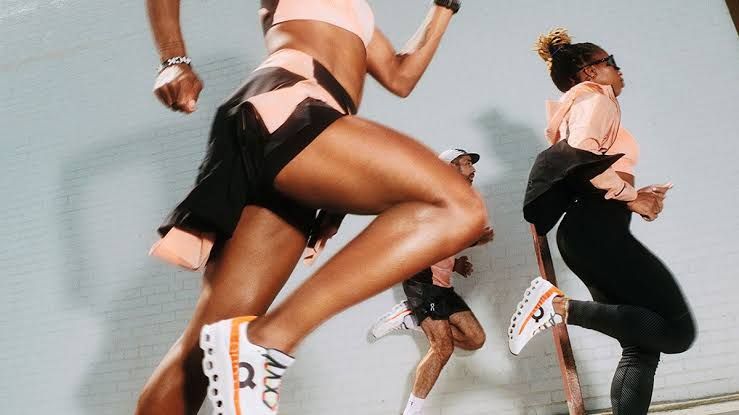
With the rise of consumerism and social media in the last decade, running has fallen victim to becoming a luxury. It is a culture with its own fashion, wellness products and trends. Rather than a sport which champions inclusivity and accessibility, it is one defined by fashion, trends and other material items. ‘Runfluencers’ play a significant role in giving running a ‘look’. For the most part, ‘runfluencers’ use their platform to offer useful advice or advocate for the mental benefits of running, such as Philly Bowden, Eilish McCoglan and Emily Jane Fairs. Nonetheless, a typical ‘Join Me for a Morning Run’ video will paint an artificial image of the sport. Devoid of blood, sweat and tears, ‘runfluencers’ may wear trending outfits from Lululemon or costly Brooks trainers exhibited through swift transitions. For those wanting to take up running, the sport appears to have a certain image which you must fit into. It is not enough to go to your local ParkRun in the clothes you have. You must have a fashionable outfit, the best kind of trainers or the latest smartwatch to record your every heart beat and breath.
Running is now an investment. Everything, from pace to product, is ranked so much so that the sport is about optimisation and being the best runner you can be. This is reflected in Sportshoes’2026 Running Report, which found that UK ‘runners spend an average of £1,296.54 a year on the sport’. Shoes account for most of that spending (£186.64 per year), followed by technology, such as headphones, smartwatches or apps, which a staggering 81% rely on. Consequently, running is no longer about what you gain. Commerciality and social media has made running a luxury available to the elite, detracting from how accessible, inclusive and beneficial the sport is.
To emphasise what has been lost, I wish to conclude this article with perhaps the most extreme running event there is. Over seven thousand miles from Chamonix, in Frozen Head State Park in Tennessee, is the Barkley Marathons. Every September, a maximum of forty runners must complete five, thirty-two kilometres loops in sixty hours. That’s one hundred and sixty kilometres in total. They cannot bring any electronic devices, including GPS tracking or music, and must navigate the route themselves using a compass and map. Oh, and there are fifteen books on the course and they must tear out the page corresponding to their bib number in each. The Barkley Marathon is insane and, if you want to protect your knees and your sanity, please don’t enter. However, from afar, running is whittled down to its simplicity. With sporting companies banned from advertising, the event embraces running as the mental sport it has always been. The few winners of the Barkley Marathon prove how the human body will always keep going, it is only the mind that holds a runner back. At the heart of running is the, sometimes grisly, mental battle and physical feats drowned out by commercial culture and social media. At the end of the day, it is just one foot in front of the other.