Why We Are Still Obsessed with Breakfast at Tiffany’s, 65 Years Later?
It is not difficult to gaze in awe upon Audrey Hepburn masquerading as Holly Golightly in the iconic 1961 Breakfast at Tiffany’s, in adoration laced with faint pity and amusement.


It is not difficult to gaze in awe upon Audrey Hepburn masquerading as Holly Golightly in the iconic 1961 Breakfast at Tiffany’s, in adoration laced with faint pity and amusement. Even if you haven’t read the novella by Truman Capote (author of In Cold Blood, another classic), you will almost certainly recognise the hallmarks of the film.
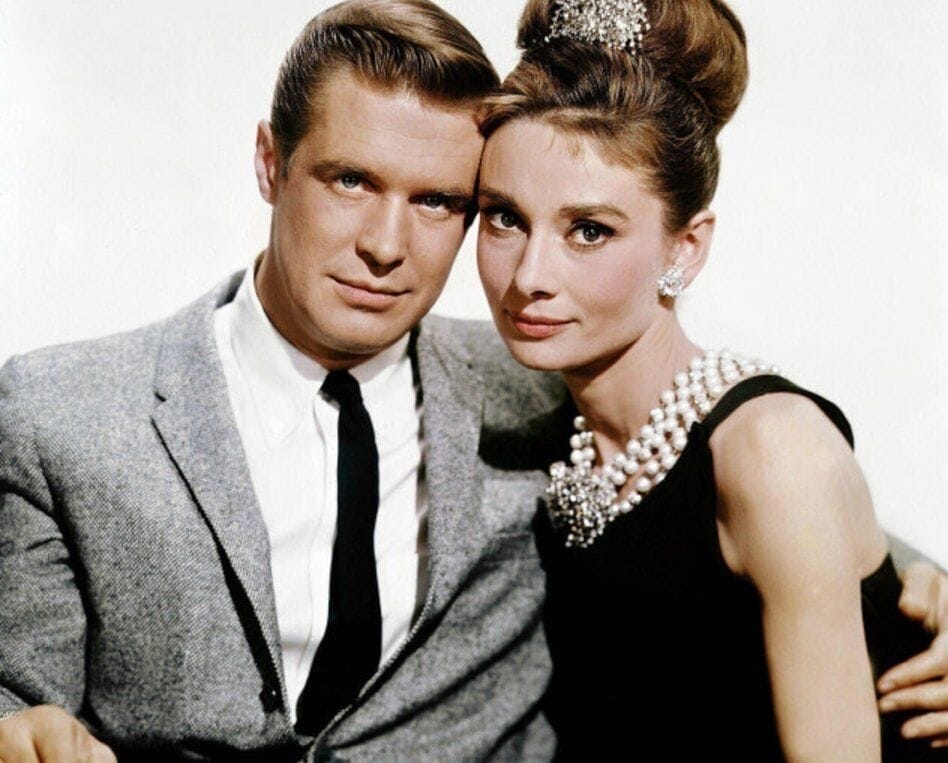
A scrawny striped ginger tom cat scuttling amongst the dregs of New York’s Fifth Avenue. Salmon-pink lipstick in the shade Pink In The Afternoon, smeared against an empty coffee mug. Doe-eyes edged with dollish, spiked black lashes, peering over a pair of designer sunglasses inquisitively. A satin Givenchy ‘little black dress’ set with ropes of ivory pearls against a swan-like throat. Glossy dark hair piled into a towering, rococo chignon, crowned with a diamanté tiara. Garish, checkered yellow taxis sweeping past open windows in a fluorescent blur, as time passes by and the past catches up…
At its heart, fashion and style are the ultimate masks, a carefully constructed armour we exploit to conceal our deepest vulnerabilities and project who we wish to become.. No one wears that mask quite like Holly Golightly, and no garment captures that protective illusion quite like the Little Black Dress. From Marilyn Monroe casting a magnetic spell across mid-century cinema in black velvet, or Carolyn Bessette-Kennedy mastering the quiet, neutral restraint of 1990s old money, the ‘LBD’ is truly a style staple in every girl’s wardrobe, re-shaped and re-constructed to fit cultural ideas of the time. Later on, 2000s Y2K style icons like Paris Hilton would lean into the black slip dress, pairing it with the ubiquitous silver ‘Return to Tiffany’ toggle necklace.
Naive, eccentric, and utterly glamorous, Holly Golightly remains a dazzling jewel amongst her mundane, apathetic neighbours, most of whom, weary of the New York slog, struggle to make ends meet. Holly sweeps around her brownstone apartment with the care-free attitude of an oblivious aristocrat; lavishly spending other people’s money, spilling champagne on bedspreads and playing hostess to an endless parade of ‘men-friends’, much to the genteel amusement of her upstairs neighbour, whom she dubs ‘Fred,’ because, ‘you look like my brother Fred.’ Holly’s escapism serves as a mirror for our own exhaustion with the cyclical nature of life, work, and death, demonstrating a yearning to defy the norm. Yet, her detachment exposes a poignant vulnerability, the human need for home and family amidst a hostile world of indifference.
Very much like passengers boarding and exiting a train, the people who walk through our lives leave indelible marks, essential to shaping who we are moving forward. The ‘train theory’ and the ‘fig tree analogy’ resonate so deeply in 21st-century culture because, whilst our individual pathways, aspirations, and difficulties vary, we all share the same fundamental anxieties regarding human connection, stability, fleeting time, and the impact of our choices. Holly’s tragedy is her refusal to let anyone truly impact her emotionally, as she fears being trapped in the hum-drum of normal American life, married to a man she loves. The irony is, of course, that emotional connection is a fundamental aspect of humanity. Therefore, by avoiding connection, Holly traps herself in her own cage, the very thing she feared the most. Subconsciously, however, Holly craves this emotional stability, reflected through her drawing connections across different people from her life, the narrator, and her brother Fred.
The men who orbit Holly's life are almost satirically extravagant. English playboy millionaires, criminal gangsters and Brazilian diplomats populate her ever-increasing list of admirers. They clog her door at night, and debris from last night’s revelry haunts her in the morning. Her kitchen fridge is not dissimilar to that of many girls in their early twenties, containing a pint of milk, bottles of champagne, penicillin nose drops, and a pair of ballet slippers. Holly always seems to come out with odd, yet extremely wise statements that bemuse ‘Fred.’ Perhaps it is this charming eccentricity that drew me into the whirlpool of Holly Golighty’s life. It is reminiscent of first year student life for myself, and likely for many; the delightful chaos of formals, nights out, drinks, dates, black tie, balls.
‘Tiffany’s. Isn’t it wonderful?’ Holly explains dreamily to Fred that the lush atmosphere of Tiffany’s calms her down right away, ‘the quietness and the proud look of it; nothing very bad could happen to you there.’ We all have that specific place of joy, real or imagined, where the rest of the world fades away. Yet, beneath this facade of elegant charm, Holly Golightly harbours darker, harrowing secrets, poorly concealed with the superficiality of diamonds and champagne.
Whilst she undergoes a crazed period of physical and psychological distraction to escape her past, it is all in vain, as Holly’s future has already been sealed. For a girl who seeks freedom more than anything, this is the most acute form of punishment. Perhaps this is what makes Holly so captivating, and so painful to observe. As she strives for one thing above all else, she finds herself excruciatingly bound by reality. The emotional tension she experiences is beautifully displayed by Audrey Hepburn.
In one of the most wonderfully written scenes in the film, Holly sits in the back of a cab, having just abandoned her nameless, and now, ownerless, cat into the thunderous rain. ‘Fred,’ then delivers one of my favourite lines in cinematic history: ‘People do fall in love, people do belong to each other, because that's the only chance anybody's got for real happiness.’ He explains that the cage she is afraid to be imprisoned in has already been constructed by herself. This begs the question as to whether or not we are responsible for our own fate, to what extent we are bound by past mistakes, and what the true definition of ‘freedom’ is in a world of false hope.

Surrounded by fragments of her dysfunctional past relationships and sordidly smoking a cigarette, Holly says nothing. Her silence sits painfully close to home. Still, the film has a gloriously happy ending. The final scene combines all the most wistful aspects of a rom-com; pouring rain, a passionate kiss, evocative music, a rescued cat, and the taxi cab pulls away, leaving Holly and ‘Fred’ to begin a new future together.
They make for a seemingly unexpected, yet irresistibly loveable couple, a penniless writer enraptured and slightly mystified by his muse, a glamorous, sharp-tongued Manhattan socialite. Despite her past, he takes her for everything that she is, all her flaws and missing pieces, and perhaps that is why she eventually finds herself falling for him. It should be noted that the novella does have a slightly different, more disconcerting ending, however, that doesn’t dim the classic beauty of the film.
There are many reasons as to why we, a 21st-century audience, are still obsessed with Breakfast at Tiffany’s. It persists because of how its atmosphere is constructed: Franz Planer’s luminous, textured cinematography framing an idealised, glittering Manhattan, set against Henry Mancini’s haunting, melancholic melody for Moon River that echoes long after the credits roll. It captures a specific age of hazy, golden-hued cinema that modern films very rarely replicate. There is something precious about Breakfast at Tiffany’s. Whatever it is, it sure is ‘perfect, baby.’